Background
BACKGOUND
Paul was born in Elizabeth, South Australia to an English father from Gillingham in Kent and an Irish mother from Wexford. The family moved back to Britain before he was a year old, and finally settled in Dalgety Bay in Fife, Scotland. He was educated at Dalgety Bay Primary and Inverkeithing High Schools.
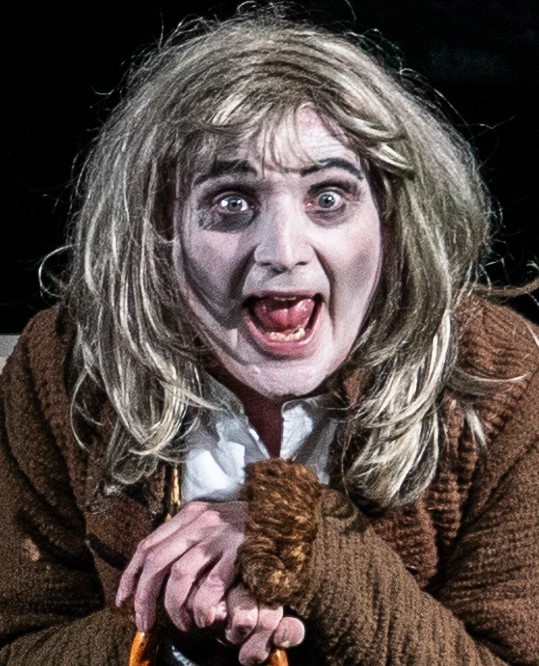
He studied Drama and Philosophy at the University of Glasgow. While there he became President of the Student Theatre Group and directed and acted in many productions. Roles performed included the title role in Shakespeare’s “Henry VIII”, Claudius in “Hamlet”, Menenius in “Coriolanus”, Davies in Pinter’s “The Caretaker”, Tolen in “The Knack” by Ann Jellicoe, Wilson in Joe Orton’s “Ruffian On The Stair”, Hepple & Macleish in “Revenge” by Howard Brenton, Leonardo in “Bristo” by Antonio Ferreira and, implausibly, one of the 3 Marys rolling away the stone with Peter Mullan and Calum Macaninch in a medieval liturgical play in the University Chapel.
He formed the Great Western Theatre Company with friends from University, managing a venue at the Edinburgh Fringe, and directing and performing in several productions. Highlights included John Jasper in Charles Dickens’ “The Mystery of Edwin Drood”, Oronte in “Moliere’s The Misanthrope Amended” by Leslie Crook, The Doctor in Buchner’s “Woyzeck”, Voltore in Volpone“ and Figaro in Beaumarchais’ “The Barber of Seville”.
After a spell working as a drama worker at the Maryhill Arts Centre in Glasgow, Paul was offered an Equity card and a season at Dundee Repertory Theatre. The theatre had asked all auditionees to prepare an operatic aria as they were mounting a production of Ken Hill’s “Phantom of the Opera”. Knowing nothing of music and little of opera, Paul had his first singing lessons with Maggie Cotter, and quickly learned Valentin’s aria from “Faust” – “Avant de quitter ces lieux” and got the job.
Apart from a role in John Cairney’s Robert Burns musical “Scot Free” the following year, Paul concentrated on acting rather than singing. However, an offer to direct a production of Gian-Carlo Menotti’s “The Consul” for the Glasgow Opera Group at the Tron started an obsession with opera. The production was a success and he went on to direct Menotti’s “The Medium” & “The Telephone” and Rimsky-Korsakov’s “Mozart & Salieri” for the Glasgow Opera Group, and Krenek’s “Johnny Strikes Up” for Music Theatre Scotland and Peter Shaffer`s “Amadeus”. He was invited to observe rehearsals of “Samson et Dalila” at Covent Garden with Jose Carreras and Agnes Baltsa, to shadow the assistant director, which led to him being asked to assist Ian Judge on his production of “Falstaff” for Scottish Opera.
While at Scottish Opera, Paul was inspired to take up singing lessons again, this time with Deirdre Trundle in Glasgow. Initially, his intention was to do musicals, but he also sang high baritone arias such as Verdi`s “Di Provenza” and “Eri tu” for fun. Deirdre encouraged him to participate in the Oxenfoord Summer school in St.Andrews with Mary Hammond, who convinced him he could make a career in singing after his performance as the Baker in extracts from “Into The Woods”. Unusually, for someone on the musicals course, he was invited to perform at a classical recital at Oxenfoord, singing “Di Provenza” – his first concert appearance.
Paul continued to work as an actor -he sang Man 1 in Maltby & Shire’s brilliant musical revue “Closer Than Ever” at Glasgow’s Mayfest. However, while working on “Pinocchio” at Glasgow Citizens’ Theatre, a chance remark that he would “rather have been an opera singer” to the show’s pianist, Julia Lynch (repetiteur at the Royal Scottish Academy of Music & Drama) led to her suggesting he sing for the Head of Vocal Studies at RSAMD to ask him for his opinion. He sang the baritone arias “Di Provenza” and “Avant de quitter”, and was informed that his top notes were too easy – he must be a tenor. Paul was invited to study with Peter Alexander Wilson and, to help with fees, he was offered a place on the teaching staff, teaching Drama to undergraduate singers. After a year of slow progress, during which he played 1st Masker & Pedro and covered Antonio & Brother Elixir in Prokofiev’s “The Duenna” (or “Betrothal in a Monastery”), Paul continued to study with Peter for another year, and so improved that he was ready to begin his new career as a professional tenor. His first concert was as the tenor soloist in Rossini’s “Petite Messe Solennelle” at the Grand Hall, Kilmarnock -although the first thing he sang as a professional tenor was “Nessun dorma” in a first half made up of popular arias.
Work with Scottish Opera’s education team and extra chorus soon followed. See biography or roles performed for details of Paul’s singing career.